

Key Takeaways
Starting a new creative hobby should feel relaxing and accessible to everyone. Here are the most essential points to keep in mind when exploring your options.
-
Choose kits that provide all necessary components for a worry-free experience.
-
Focus on kits with pre-printed designs to make the stitching process intuitive.
-
Adjustable needle tools add versatility to your creative projects.
-
Consistent tension in your hoop is key to uniform, professional results.
-
Maintaining your equipment ensures your tools last for many future projects.
Understanding punch needle essentials
Punch needle is a wonderful way to express your personality through textures and colors without needing any prior experience. You simply push loops of yarn through a backing fabric to form a raised pattern. It is an engaging, screen-free activity that turns simple materials into cozy decor items.
Anatomy of the punch needle tool
The tool is the heart of your project, consisting of a handle, a hollow shaft, and an eye for the yarn. You thread the yarn through the top and down to the needle tip, which creates the loops.
Selecting the right fabric for your projects
Choosing the right backing, such as monks cloth, allows the needle to slide in and out smoothly. The weave must be open enough to accommodate the needle without fraying but sturdy enough to hold the yarn securely in place. Using the correct foundation makes the entire process feel effortless.
Essential embroidery hoops versus frames
Keeping your fabric tight is essential for achieving clean, consistent stitches. A hoop holds the fabric taut, while a wooden frame can offer even more stability for larger designs. When your tension remains even, you can focus fully on the rhythmic act of punching.
Choosing the right yarn weight and texture
Matching the yarn to your needle size ensures the loops sit properly against the fabric. Thicker wool works well for rugs and chunky pillows, while finer threads suit detailed wall hangings. The texture you choose defines the overall visual impact of your finished piece.
Determining your skill level and project scope
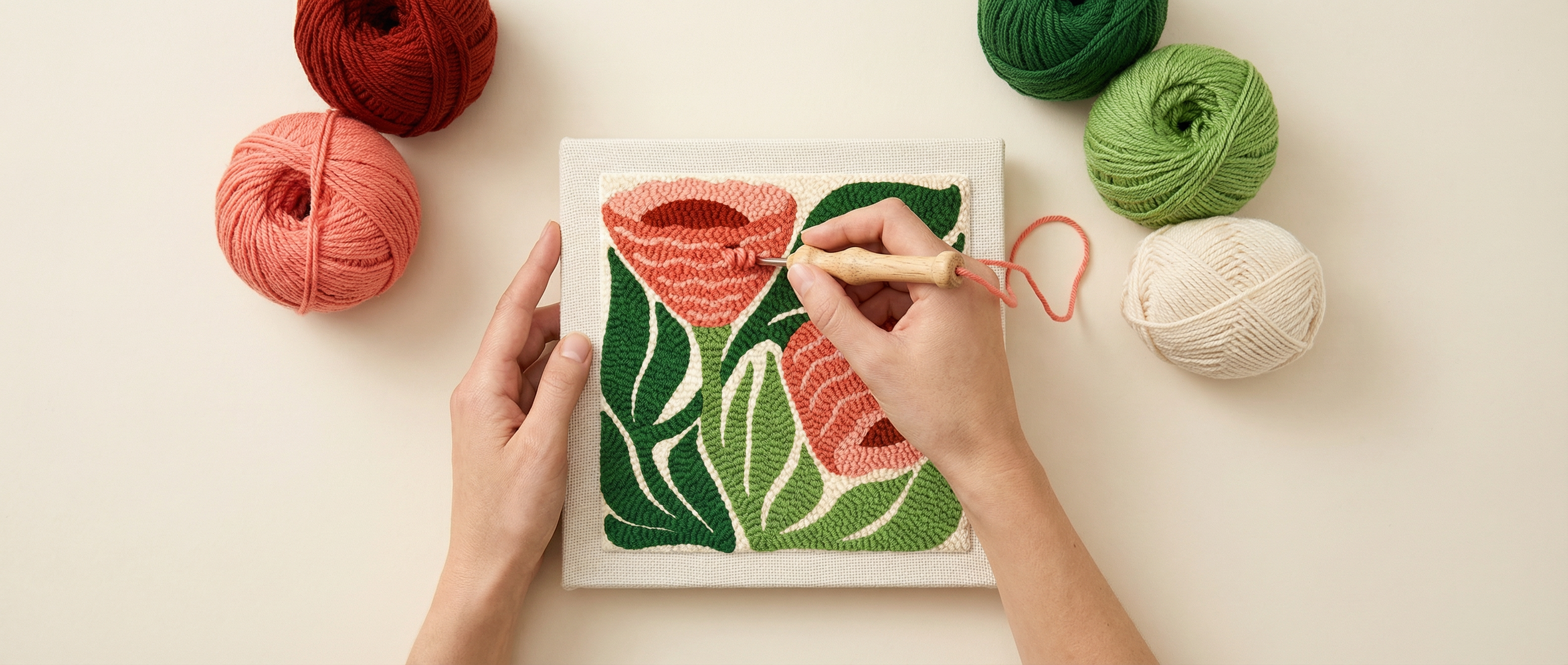
Finding the right project helps you feel confident from the very first loop. We recommend browsing all punch needle kits to see what styles catch your eye. Whether you have an entire afternoon or just a few quiet evenings, there is always a design that fits your pace.
Small projects for quick wins
Small coasters or wall hangings let you finish a project in a few hours. These are perfect when you want the satisfaction of completing something beautiful quickly. You can enjoy the process of creating beautiful handmade wall art without feeling overwhelmed by a massive canvas.
Advancing from patterns to freehand work
Once you feel comfortable with the basics, you might feel ready to experiment with your own shapes and colors. Transitioning to freehand allows you to customize your space exactly how you like it. The confidence you gain from finished kits makes this leap feel natural and exciting.
Matching needle size to project complexity
Your needle size directly influences the scale of your stitches and the overall detail level. Larger needles cover surface area quickly, which is great for beginners who want to see fast progress. A well-balanced kit matches the needle to the design complexity automatically.
Evaluating the difficulty level of pre-printed cloth
Pre-printed designs remove the guesswork, letting you focus on the creative experience. This is one of the best ways to ensure your project looks clean and professional. It allows you to relax and enjoy the rhythm of the work rather than measuring the canvas.
Identifying key features in beginner-friendly kits
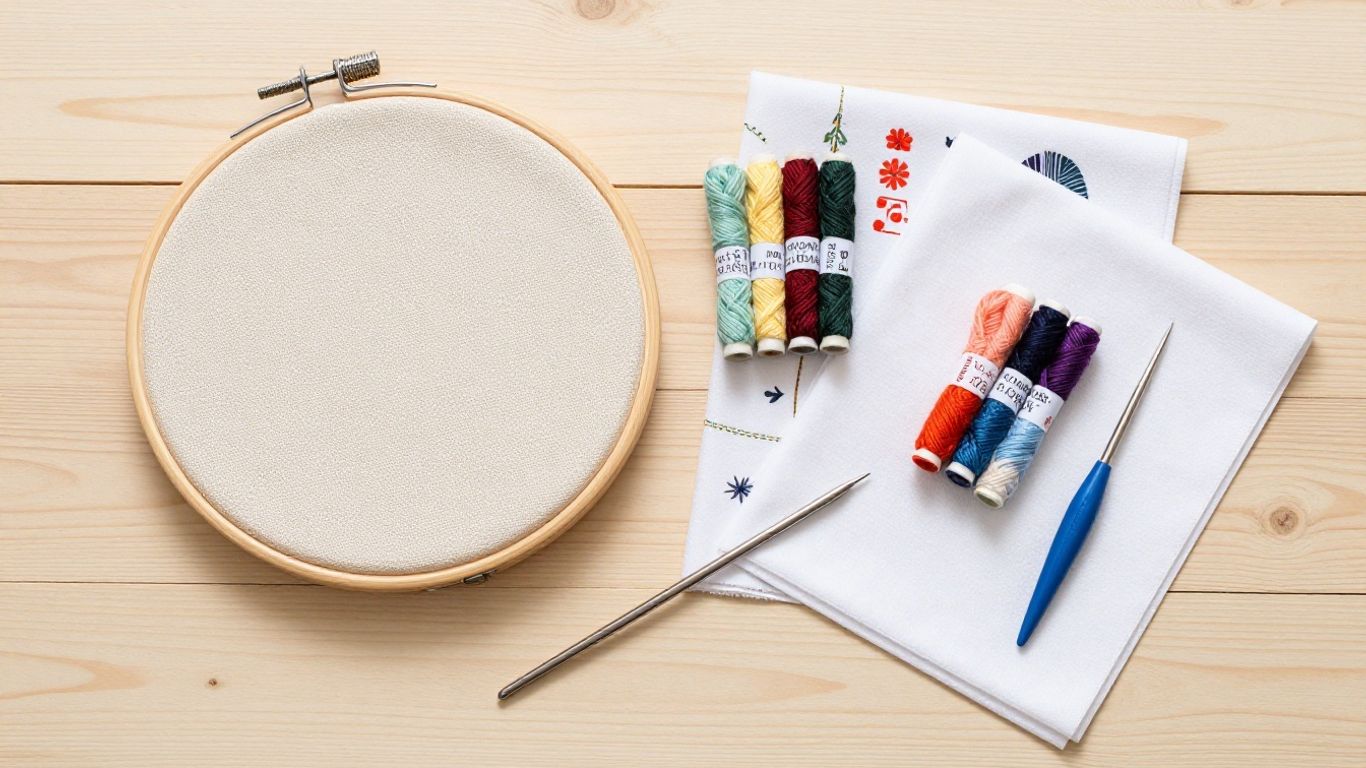
An ideal kit should provide everything you need so you can start right away without extra shopping. Like the sets from HeyHobby, the best kits are curated to include exactly the right amounts of materials. Everything is designed to make your experience smooth and enjoyable.
Importance of adjustable needle length
Adjustable tools let you vary the loop height, which adds dimension to your textures. You can experiment with short, fine loops or tall, fluffy ones depending on your target design. This one feature adds immense creative flexibility to every project.
Ergonomic handles for comfortable crafting
Comfort is vital when you are spending time on a relaxing project. Tools with ergonomic grips reduce hand fatigue, letting you punch for longer periods without feeling strained. A supportive handle design helps you stay in the flow of your hobby for the full 4–8 hours.
Quality of included thread and yarn
High-quality yarn ensures your finished piece feels soft and retains its shape over years of use. Pre-cut lengths help you keep your workspace tidy while you work through your design. When the materials feel premium, the final result feels even more special.
Clarity of printed pattern designs
Clear, easy-to-follow patterns are essential for a stress-free outcome. When you can easily see where to place your stitches, the creative process becomes a meditative joy. Good design clarity is what turns a craft project into a rewarding piece of home decor.
Comparing materials and quality across brands
Understanding how different components behave can help you choose the best options for your next project. We can look at how construction impacts the quality of your experience by comparing commonly used materials.
Wooden versus plastic tools
|
Tool Type |
Durability |
Comfort |
Best Usage |
|---|---|---|---|
|
Wooden |
High |
Moderate |
Long-term use |
|
Plastic |
Standard |
High |
Beginners |
|
Metal |
Excellent |
Varied |
Frequent projects |
These differences primarily affect how the tool feels in your hand over time. Most folks find that the weight of the tool contributes to the overall premium feel of their kit.
Natural fiber fabrics versus synthetic blends
Natural fibers like cotton or monk's cloth are standard because they withstand the punching process well. They offer the right amount of resilience, ensuring your stitches don't pull through too easily. Synthetic blends can sometimes feel slippery, which might make tensioning more difficult for a newcomer.
Reliability of included instructions
Strong instructions provide peace of mind as you begin your journey. They bridge the gap between having a box of supplies and creating a finished piece you are proud to display. Look for guides that prioritize visuals to help you understand each technique quickly.
Why reputable suppliers matter for beginners
A trusted supplier ensures you get exactly what you expect, removing uncertainty from your shopping experience. They prioritize the outcome of your journey, ensuring your materials won't fail you halfway through a design. Choosing reputable sources makes your first venture into this hobby much more successful.
Setting up your first punch needle workspace
Setting up a dedicated nook can help you stay organized and keep your creative flow focused. It does not need to be a large space, just an area where you feel comfortable and inspired. You might consider trying a Beginner Punch Needle Kit to have all your basics readily available.
Essential accessories like fine-tip scissors
You will need a few simple household tools to help with your finishing touches. A pair of sharp, fine-tip scissors is necessary for trimming yarn ends cleanly once you reach a new section. These small details ensure your final wall art looks neat and professional.
Managing tension in your embroidery hoop
Maintaining the right tension is an active process as you move through your design. Check your fabric regularly to make sure it remains as tight as a drum. If the fabric feels loose, simply pull the edges to re-seat the hoop.
Tips for organizing your yarn colors
-
Keep your yarn sorted by color in separate small containers or baskets.
-
Group your yarn by the design segments to manage your consumption.
-
Use small labels if you have multiple projects going at once.
-
Store leftover yarn in a dry place to prevent tangling or dust.
Organizing your materials beforehand makes your crafting time feel more like a vacation. You can sit down with your supplies ready and focus entirely on the fun.
Maintaining your needles after use
After you finish, lightly clean your needle to remove any fiber residue that might have built up. A quick wipe keeps the shaft clear for your next session. Storing your tools in a dedicated bag or box keeps them protected and easy to find when inspiration strikes again.
Conclusion
Embarking on a punch needle adventure is a fantastic way to enjoy meaningful, screen-free time while ending up with a stunning piece of handmade decor. When you choose the right starter materials, you can focus purely on the joy of making rather than worrying about the technicalities. By staying mindful of your tension and keeping your tools well-maintained, you will find that each project builds your confidence and results in a beautiful, finished item that carries the pride of saying, "I made this." Happy crafting.
Frequently Asked Questions
Is punch needle difficult for absolute beginners?
It is one of the most accessible textile crafts because it focuses on a simple pushing motion rather than complex knots or patterns.
How long does a typical project take to finish?
Most projects are designed to be completed in a few evenings or a single weekend, usually ranging from four to eight hours of effort.
Do I need to purchase extra tools before buying a kit?
Most starter kits are all-inclusive, providing the tool, fabric, yarn, and instructions needed for your initial projects.
Can I wash my finished wall art pieces?
While they are decorative, you can gently spot clean them if necessary, avoiding harsh detergents or soaking the fabric.
Is this craft similar to embroidery or knitting?
It shares the artistic goal of creating textured surfaces but is distinct because it relies on loops of yarn rather than intricate sewing stitches.
What should I do if I run out of yarn?
Most quality kits provide enough yarn to complete the design, but you can always reach out for replacements if human error leads to a shortage.
Can I use my own fabric for punch needle?
You can, but it must have the correct weave characteristics to hold the yarn loops properly, which is why kits often include specific fabrics.


